Water supply & purification
Plan the water capacity and filtration around the cleaning task and the quality of the incoming water.
 Loading…
Cleaning solutions
A complete solution that combines drone technology, professional installations and technical expertise.
Built around your operation
Installations that are all-in-one solutions containing large water tanks, boosted filtration, chemical management, high pressure, safety procedures and any necessary equipment.
Set packages for a range of customers, plus the opportunity to create a bespoke build designed exactly around your requirements.
Plan the water capacity and filtration around the cleaning task and the quality of the incoming water.
Consider compatible pumps, pressure, flow and hose routing between the vehicle and drone.
Bring the supporting equipment together around the available space, payload, access and storage.
Plan how the installation fits alongside your other cleaning methods, operators and maintenance needs.
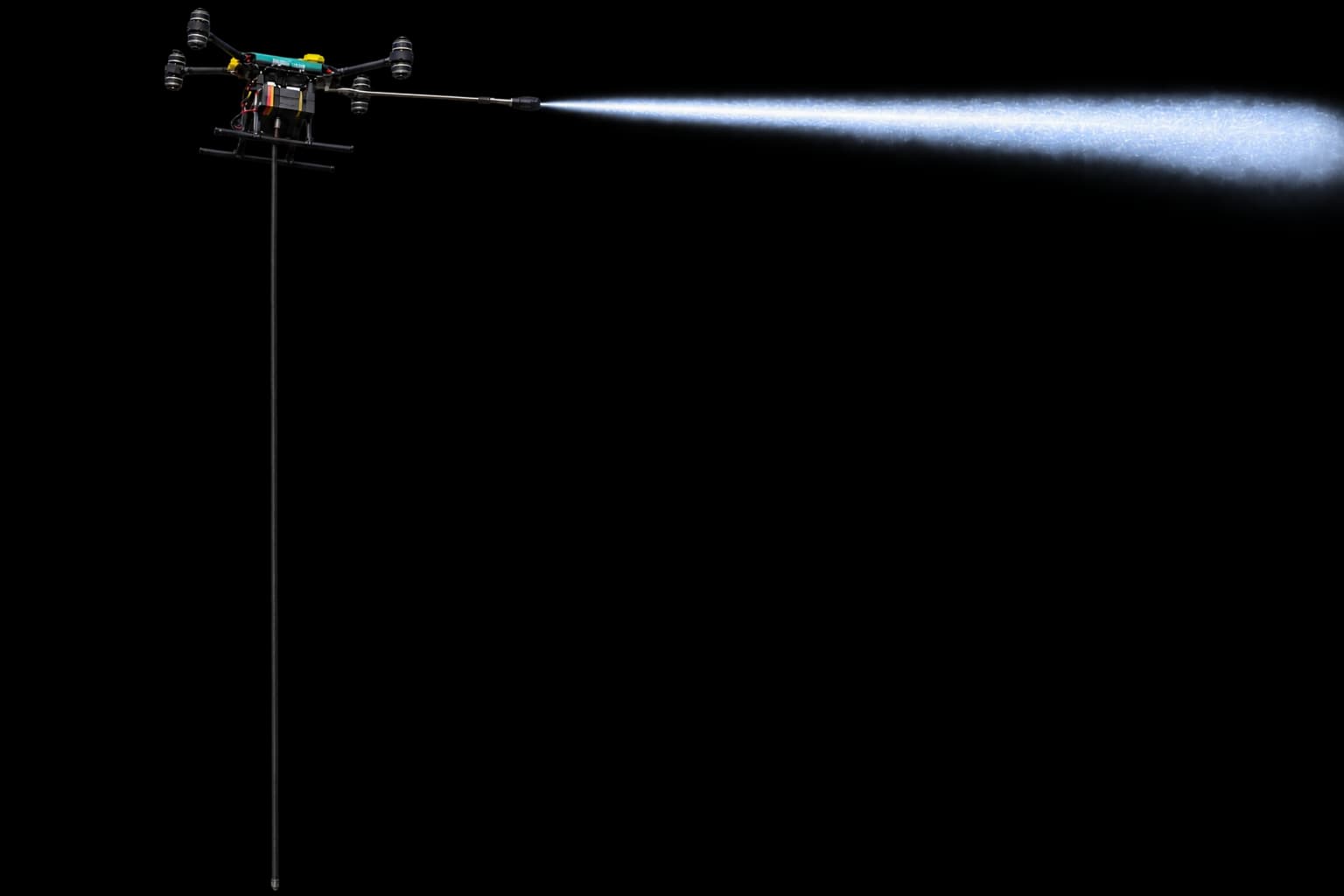
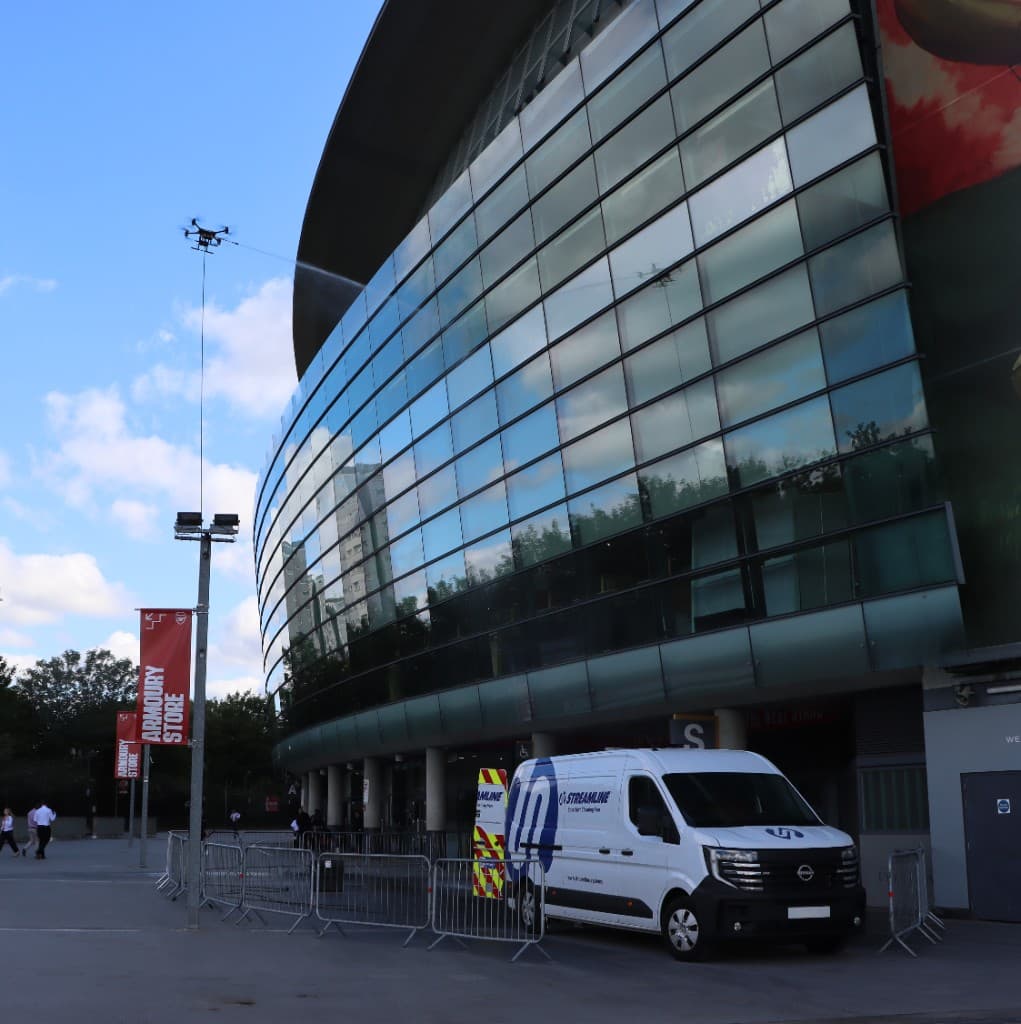
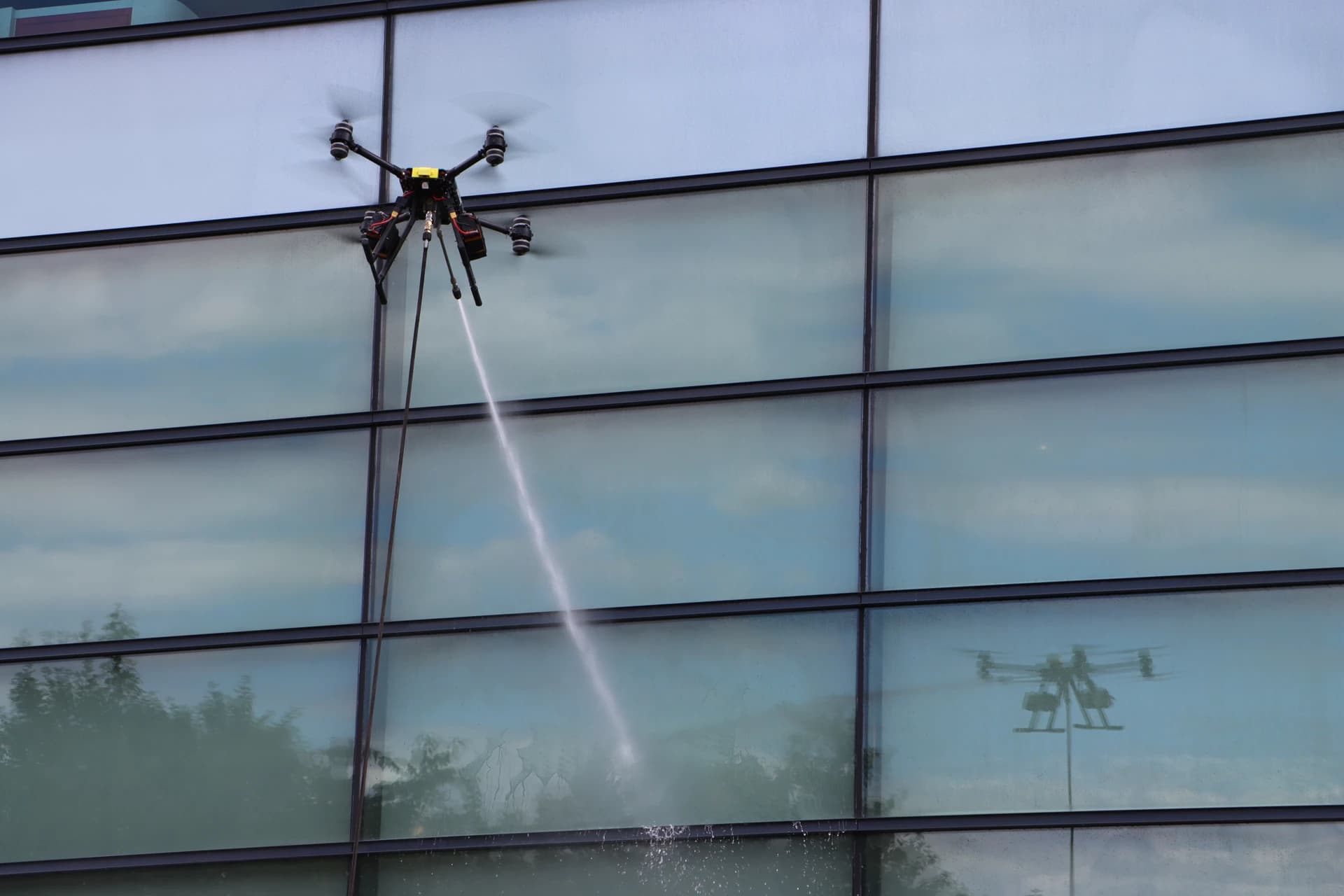
Drone cleaning uses remotely controlled or semi-autonomous drones to work on difficult-to-reach windows, building façades, solar panels, roofs and other high-level surfaces. The potential benefits include reducing the need for people to access certain areas at height, reaching awkward elevations and covering large areas more efficiently.
The technology is still developing. Battery life, weather, equipment weight, operating permissions and safety around people all affect suitability. A drone is another tool within a professional cleaning operation, rather than an automatic replacement for every traditional method.
Streamline creates van installations for drone cleaning, drawing on its experience in water-fed cleaning equipment and vehicle systems. The installation brings together the supporting water supply, purification, pumps and hose management around the requirements of the operation.
Consider how the drone will fit alongside existing cleaning methods, operators, maintenance and customer requirements. The aim is a complete system combining the appropriate water quality, equipment, safety procedures and professional cleaning expertise. Speak with Streamline about compatibility before choosing equipment.
Assess cleaning performance, surface compatibility, payload capacity and stability, water supply and purification, and the pressure and flow required for the work. Hose weight, length and management are critical when the drone is connected to a ground-based supply.
Review flight time, charging and spare batteries; weather limits; safe operating height and reach; obstacle avoidance, emergency landing, return-to-home and reliable communications. Plan operator training, current aviation permissions, insurance, maintenance, spare parts and technical support.
Evaluate realistic productivity, transport, setup and pack-down time alongside the full investment and running costs. These include water, filters, membranes, chemicals, batteries, maintenance, insurance and operator time. Reliability and future upgrades also matter for a commercial operation.
Imagine a future where cleaning high-rise buildings no longer requires workers to spend hours working at dangerous heights. This is where drone cleaning technology comes in.
Drone cleaning is a developing idea within the cleaning industry that uses remotely controlled or semi-autonomous drones to clean difficult-to-reach areas, such as windows, building facades, solar panels, roofs, and other high-level surfaces.
One of the main reasons this idea is developing is safety. Traditional high-rise cleaning often requires workers to use scaffolding, ladders, cherry pickers, or suspended platforms. These methods can involve significant risks, particularly when working at height. Cleaning drones could reduce the need for workers to physically access these dangerous areas. Another important advantage is efficiency. Drones could potentially cover large areas more quickly than traditional methods. They may also be able to reach areas that are difficult or time-consuming for cleaning teams to access.
Drone cleaning could also help businesses reduce costs over time. Although the technology can be expensive to develop and purchase initially, it could reduce the need for specialised access equipment and decrease the amount of time workers spend carrying out certain high-level cleaning tasks.
The idea is also developing because of advances in robotics, sensors, cameras, artificial intelligence and battery technology. These technologies are making drones more capable of operating accurately and safely around buildings.
However, drone cleaning is still an emerging concept. There are challenges to overcome, including battery life, weather conditions, water and equipment weight, regulations, safety around people, and the need for reliable technology.
Overall, drone cleaning represents an exciting development in the cleaning industry. It has the potential to make certain cleaning tasks safer, faster and more efficient, particularly when dealing with high-rise or hard-to-reach areas.
As the technology continues to improve, drone cleaning could become an increasingly important part of the future of professional cleaning.
Streamline® play an important role in supporting the development of drone cleaning within the cleaning industry by providing the systems, technology and operational support needed to make drone cleaning more practical and scalable.
As drone cleaning develops, cleaning companies will need more than just the drone itself. They will need effective ways to manage equipment, water, chemicals, operators, scheduling, maintenance and customer requirements. This is where Streamline® can add value.
One key area is water management. Drone cleaning systems require a reliable supply of purified or treated water to achieve high-quality cleaning results, particularly when cleaning windows, solar panels and building facades. Streamline's expertise in water-fed cleaning technology could help businesses develop suitable water purification and delivery solutions for drone-based operations.
Streamline® could also support businesses by helping integrate drone cleaning into existing professional cleaning equipment and processes. Rather than replacing traditional cleaning methods completely, drones could become another tool within a wider cleaning operation, allowing companies to choose the most appropriate method for each job. Another important area is efficiency and sustainability. By combining modern cleaning technology with efficient water purification and water-fed systems, businesses could potentially reduce water waste, improve cleaning performance and minimise the need for certain types of access equipment. Streamline® could also support the industry through product development, training and technical knowledge. As drone cleaning technology evolves, collaboration between drone manufacturers, cleaning companies and equipment specialists will be important. Streamline® could help bridge the gap between emerging drone technology and the practical requirements of professional cleaners.
The future opportunity is not simply about putting a cleaning system onto a drone. It is about creating a complete solution that combines drone technology, purified water, cleaning equipment, safety procedures and professional cleaning expertise.
By supporting this development, Streamline® position itself at the forefront of an emerging area of the cleaning industry and help cleaning businesses move towards safer, more efficient and technology-driven ways of working.
In short, Streamline Systems can help turn drone cleaning from an emerging concept into a practical cleaning solution.
Tell us about your drone, vehicle and cleaning work so we can discuss the supporting installation.