A Guide to Ship and Hull Cleaning: How High-Pressure Tripods Are Making The Job Easier
Maintaining a ship’s hull is more than just an operational necessity – it’s critical for performance, safety, and environmental compliance.
Ship and hull cleaning prevents biofouling, improves fuel efficiency, and ensures vessels meet stringent maritime regulations.
However, achieving a clean hull can be a labour-intensive, risky, and a time-consuming task.
Here we’ll explore the importance of ship and hull cleaning, compare traditional methods to modern techniques, and explain why high-pressure tripod kits are a must-have tool for maritime professionals are.
The Importance of Ship and Hull Cleaning
A dirty hull increases drag, reduces a ship’s speed, and forces engines to work harder, leading to higher fuel consumption and costs.
Beyond operational concerns, unclean hulls can harbour invasive species, posing significant environmental risks. International regulations, such as the International Maritime Organization’s (IMO) guidelines, emphasise the importance of maintaining clean hulls to promote ecological sustainability and operational efficiency.
Regular cleaning not only extends a vessel’s lifespan but also prevents hefty fines for non-compliance with environmental standards.
Cleaning Inside the Hull: Contaminant Removal and Maintenance
While cleaning the exterior hull is critical, maintaining the interior of the hull is equally important. After unloading cargo such as crude oil, chemicals, or other bulk materials, residues and contaminants often remain inside the hull, posing significant risks.
Why Clean the Inside of the Hull?
- Safety: Residues can create hazardous environments, leading to corrosion, contamination, or even flammable conditions.
- Regulatory Compliance: Many port authorities and international organisations mandate the removal of residues to minimise environmental hazards.
- Operational Efficiency: A clean interior ensures that subsequent loads are not contaminated, preserving cargo integrity and preventing costly delays.
How High-Pressure Cleaning Aids Interior Hull Maintenance
High-pressure systems, combined with the precision and stability of tripod kits, make cleaning the interior hull safe and effective. Operators can remove stubborn residues, oil films, and contaminants from tanks and storage areas without needing time-consuming lifts, cranes and scaffolding.
Best Practices for Interior Hull Cleaning:
- Drain Residues First: Remove any bulk residues before initiating high-pressure cleaning.
- Use Rotating Nozzle Attachments: These provide better coverage for curved or hard-to-reach areas inside tanks or storage spaces.
- Ensure Ventilation: Properly ventilate the interior during cleaning to avoid pressure buildup or hazardous gas accumulation.
- Inspect After Cleaning: Conduct a thorough inspection to confirm that all contaminants are removed, ensuring the hull interior is ready for its next use.
Incorporating interior hull cleaning as part of routine maintenance ensures vessels remain safe, efficient, and ready for cargo.
Traditional Methods vs. Modern High-Pressure Cleaning
Traditional Methods:
Historically, hull cleaning—both inside and out—was a manual process involving labour-intensive scrubbing and the use of scaffolding or confined space entry. These methods were time-consuming, risky, and less effective at removing hardened grime and residues.
Modern High-Pressure Cleaning:
High-pressure cleaning systems, particularly those used with tripods, provide a more efficient solution. They enable operators to clean large surface areas quickly, minimise safety risks, and achieve superior cleaning results, both externally and internally.
At Streamline™, we understand the challenges of maintaining large marine vessels, especially when it comes to cleaning at elevated heights. Our Highline™ Carbon Power Pole Tripod Kit is engineered to address these challenges effectively.
View the Highline™ High Pressure Tripod
Key Features and Benefits:
- Enhanced Stability: The tripod’s robust frame, constructed from marine-grade stainless steel, provides a stable platform for high-pressure cleaning, reducing operator fatigue and increasing cleaning accuracy.
- Extended Reach: With telescopic poles reaching up to 42 feet, operators can clean high areas from the safety of the ground, eliminating the need for ladders or scaffolding.
- Versatile Attachments: The kit includes various nozzles and accessories, such as a 3-nozzle wall-crawler and a hard surface cleaner, allowing for efficient cleaning of different surfaces and contaminants.
- Portability and Ease of Use: Designed with heavy-duty locking castor wheels and a foldable frame, the tripod system is easy to manoeuvre and store, facilitating quick deployment and operation.
By integrating the Highline™ Carbon Power Pole Tripod Kit into your maintenance routine, you can achieve thorough cleaning of ship exteriors and interiors, ensuring compliance with environmental regulations and enhancing vessel performance.
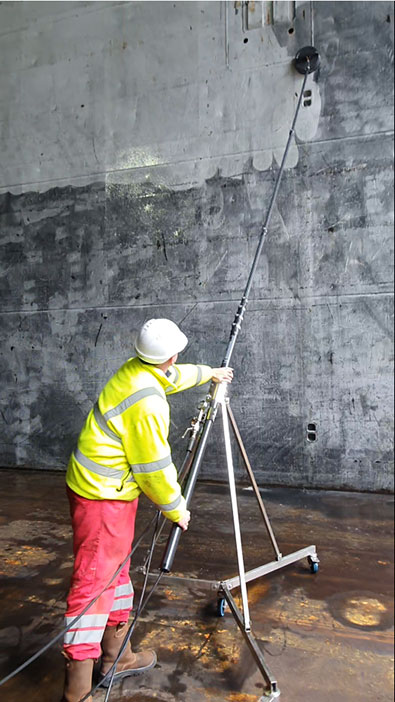
High-pressure tripod systems are designed for a variety of maritime cleaning applications. Their robust design and compatibility with high-pressure washers make them ideal for tackling demanding cleaning tasks:
- Commercial Shipping: Effectively removes biofouling and grime from large container ships, maintaining hull performance and reducing drag.
- Tanker Vessels: Assists in cleaning both the exterior hull and interior tanks of oil or chemical residues, ensuring compliance with safety and environmental regulations.
- Fishing Vessels: Keeps fish holds and exterior hulls clean to maintain sanitation standards and operational efficiency.
- Luxury Yachts: Ensures spotless exterior surfaces, preserving aesthetics and enhancing fuel efficiency.
By enabling cleaning from the safety of the dock or ground level, high-pressure tripod kits reduce risks for operators and improve cleaning efficiency.
Environmental Considerations
High-pressure tripod systems are environmentally friendly, reducing the need for chemical cleaners that can harm marine ecosystems. For interior hull cleaning, they also minimise the use of harmful solvents by relying on the power of water pressure, aligning with sustainable maritime practices.
Cleaning a ship’s hull—both inside and out—is essential for safety, efficiency, and compliance.
High-pressure tripod systems provide a solution for professionals looking to simplify and enhance their maritime maintenance processes.